
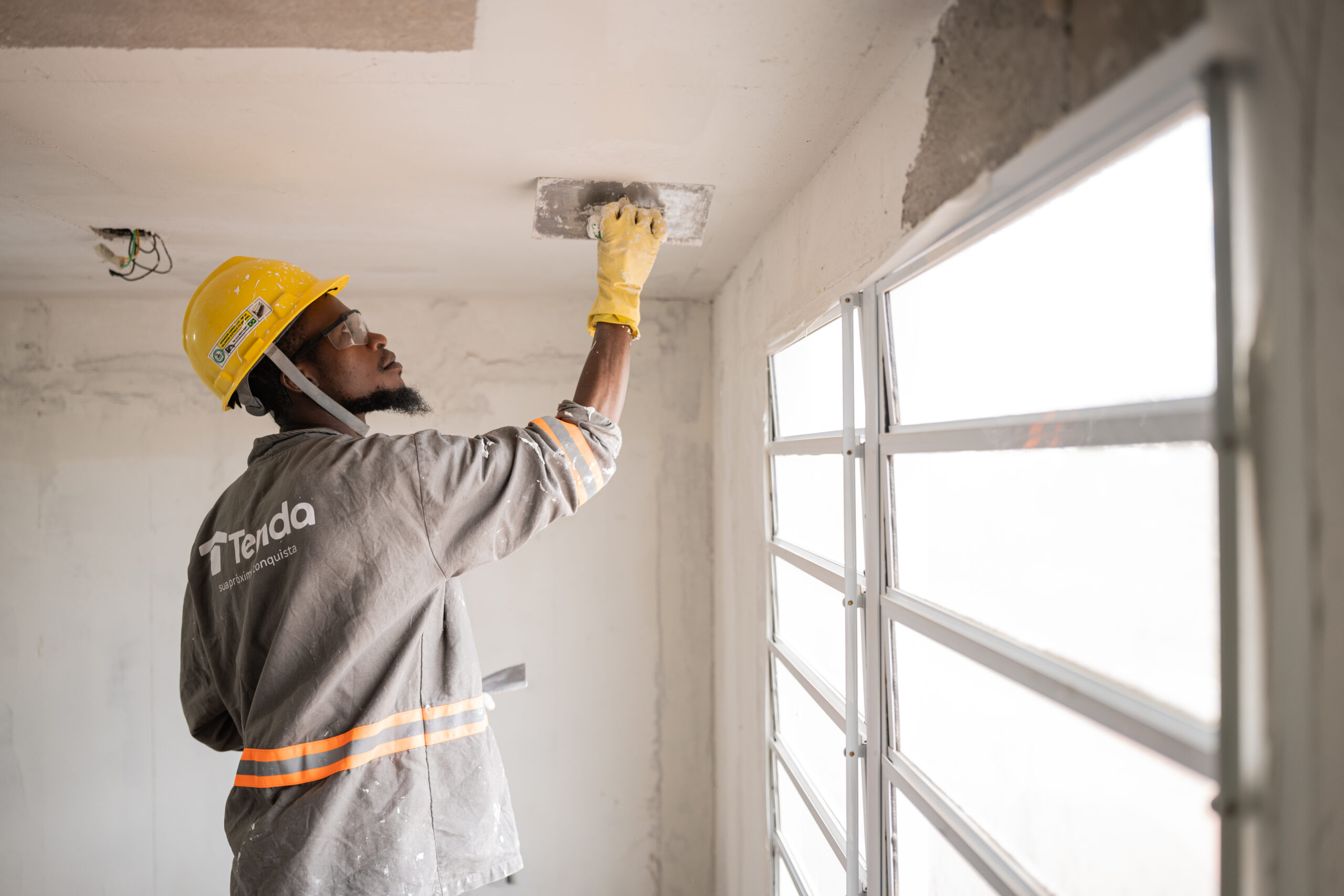
Learn about the case of Construtora Tenda and the inclusive culture model that generates social mobility and internal trust proven by results
The history of inclusion in Construction company Tenda is a success story that demonstrates how the intentional management of diversity and culture can generate profound social impact and competitive advantage. Since 2021, Tenda has developed a structured program that, over time, has already impacted the lives of more than 1,500 people.
The starting point was a decision that required institutional courage: to see the Venezuelan humanitarian crisis not just as a social challenge, but as a genuine opportunity to align human responsibility with real operational labor needs.
This is how the Reconstruction program was born, focused on hiring immigrants at Construtora Tenda, which today mobilizes more than 500 professionals in seven Brazilian states. This initiative not only helps to solve the company's labor problem, but has also established itself as an engine of social mobility for families looking for a fresh start.
Today on the blog, we explore how this cultural transformation was built, overcoming language barriers and cultural differences, and how its results are reflected in solid figures, such as the lower turnover of immigrants 27% than Brazilians.
A deliberate cultural transformation
Legitimate concerns about language barriers, cultural differences and operational complexities raised real questions on construction sites. But Tenda didn't ignore these concerns. On the contrary, it faced them head on. “I wouldn't say there was resistance, but a little mistrust because they were people who didn't speak the same language and what complexities this could bring to everyday life. In view of this, during the first cycle of the project, we dedicated ourselves to raise awareness our team and bring the context to all employees, which proved to be the right strategy,” says Cristina Caresia, Director of People and Management at Construtora Tenda.
This awareness-raising was not a one-off event. Conversations, literacy and continuous awareness actions e inclusive culture were directed at both the immigrants and the administrative and leadership teams. “The construction site is a very democratic environment, where people welcome each other and the reception of the immigrants was natural,” says Cristina.
With several nationalities in the company, the cultural challenges exist and are diverse. Issues of religion, food, cultural rites and working relationships don't disappear with good intentions. But Tenda has learned to treat immigrants with genuine sensitivity: translating documents, using translation apps, learning on a daily basis and open conversations and adaptations when necessary.
“What Tenda demonstrates is that a inclusive culture true goes beyond policies on paper. It's about creating structured processes that turn diversity into a real competitive advantage. When a company invests in continuous awareness-raising and adapting processes, it's not just fulfilling a social agenda, it's building a more resilient and humane management model,” says Laura Salles, CEO of PlurieBR, the first SaaS platform of inclusive culture management Brazil.
Acceleration built on trust
The growth at Tenda has been remarkable: an increase of 95% in the number of immigrants hired in just one year. For Cristina, the first factor that explains this significant acceleration was the favorable momentum of the segment. “The momentum in the construction sector is hot, especially for those working with Minha Casa Minha Vida,” he says. This warming up of the market has enabled the company to significantly expand its offer of vacancies to the immigrant public.”.
But growth wouldn't be possible due to market demand alone. The second factor is the internal recognition gained over time. “We have a very solid track record with this experience, recognized by the construction team, HR and partners, which makes this process very natural within the company. This growth was not based on fragile experimentation, but on concrete results that generated and still generate internal trust. The combination of a window of opportunity and established credibility created the ideal conditions for expansion.”, explains Caresia.
Numbers that speak louder than words
In 2025, according to Tenda's People and Management director, immigrant turnover will be 27% lower than that of Brazilians. And that's not a detail, it's a profound indicator of engagement.
“The difference for us lies in other points such as turnover and motivation within the construction site, where we have a highlight for this work. With regard to engagement, There is a feeling of gratitude on their part, who want to do a good job and pursue a career, which ends up having an impact on working environment in a positive way. And the company responds with professional mobility tangible. When it comes to promotions, the track is the same for everyone, based on commitment, quality of work and achieving targets“, says the manager.
To give you an idea, in the last year, a significant proportion of immigrants with more than a year in the company have been promoted within this structured career path. Francisco Antonio Flores is an example that frequently appears in reports on the program. His story, starting as a helper and rising to leadership positions, reflects a deliberate pattern rather than an exception at Tenda.
Human impact that transcends borders
If each immigrant employee represents a family of approximately three people, Tenda is impacting the lives of more than 1,500 people. “It's also important to mention that some immigrants have the habit of sending part of their salary to their families, who remain in their country of origin. When an immigrant achieves stability, not only does their local life change. There is a multiplier effect that crosses oceans.”, says Caresia.
This is particularly significant when you consider that construction has historically offered irregular and often informal careers. “Tenda has made an intentional choice: it hires all the labor on its construction sites on a CLT basis, guaranteeing labor rights, company benefits and collective bargaining coverage. “For an immigrant looking for a fresh start, it makes a lot of difference.”, says Cristina.
Real training
The profiles of the immigrants hired are highly varied. Some arrive as qualified professionals with previous experience in construction. Others have worked informally in construction in their home countries. There are also those who have never had any contact with the industry.
In addition, Tenda has programs for technical training such as FormAção and Fábrica Escola, programs that are not exclusive to immigrants, but where they represent more than 90% of the people trained. The training provided is the same for all employees, and the quality audit inspects all the teams' work, with no distinction between immigrants and Brazilians. The safety and quality standards of Brazilian construction are not compromised.
Bureaucratic challenges and the necessary support
Hiring immigrants is no simple bureaucracy. There is documentation, regularization and complex legal issues. Tenda has developed a structured support network to deal with this. “We have a network of institutions that serve immigrants in all the capitals where we operate, where we direct those who need support.”, says Caresia.
The company has a corporate team that visits construction sites regularly and makes follow-up with HR to identify difficulties. And in regions with a higher concentration of immigrants, such as São Paulo and Rio Grande do Sul, there are social assistance professionals with specific experience in immigration acting as service providers for the program.
“It's important to note that the people Tenda hires are already in good standing, as they go through the partner NGOs or public facilities before being hired. This significantly reduces the operational bureaucratic burden, but also ensures that the company is not creating new problems while solving old ones.”, he points out.
What didn't work also teaches
Not everything went smoothly. There are always people who don't adapt, and Tenda doesn't fantasize about that. But it's important to point out that the company doesn't have any emblematic cases where it hasn't been able to offer some kind of support.
According to the Director of People and Management at Construtora Tenda, there have been situations in which reality has gone beyond the corporate reach. A Venezuelan had to move because his son needed health treatment in another state where Tenda did not operate. An Angolan had to return to his country to take on family responsibilities. In these cases, there was no negligence on the part of the company, but a recognition that some human demands transcend the needs of the company. organizational boundaries.
“At no point did we think about giving up. We started the program aware that we would have challenges and we were willing to face them, as long as they didn't take away from the program's sustainability. The biggest challenges we encountered were communication (lack of understanding of certain words and expressions which can lead to conflict) and cultural differences (religious issues, food, cultural rites). And here, the support of institutions such as the Refugee Business Forum and partner NGOs proved to be fundamental,” says Caresia.
The learning journey in the company
Four years of the program have left their mark on Tenda's internal policies. Admission checklists have been revised, documents have been translated, processes have been adapted. And here's the detail that often goes unnoticed: these changes have benefited the entire organization, not just immigrants.
“We learned that the construction sector can contribute a lot to the immigration context in Brazil, bringing good prospects to people who arrive looking for a fresh start. And from this, we can contribute and influence so that beautiful stories are told, knowing that we played an important role for these people. It's a legacy we can leave as a company”, reflects Caresia.
“The case of Tenda perfectly exemplifies how people and culture data, When managed well, they become high-impact strategic decisions. The 27% reduction in immigrant turnover is no coincidence; it is the direct result of good management. inclusive culture evidence-based, structured processes and continuous people development. This is the kind of transformation that only happens when diversity stops being a discourse and becomes a method”, adds Laura Salles, CEO of PlurieBR.
Expanding responsibility
Recognized by the UNHCR and a member of the United Nations Global Compact, Tenda now plays a different role. In 2025, it was recognized as a mobilizing company in the Forum of Companies with Refugees.
“Our role is to use the space and visibility we have to encourage other companies, through our example and our results, to get closer to the refugee and immigration agenda and contribute in any way they can. Generating jobs and income is very important for this public, but there are also other ways of contributing to this community, and each company can contribute in whatever way it can.”, Caresia points out.
For 2026, Tenda has not yet set a precise numerical growth target. The tendency, according to Cristina, is to adopt a more stable behavior in absolute numbers, devoting energy to strategic expansion in the interior of São Paulo, where it operates the Alea brand (houses with technology). woodframe) in operational growth.
This reflects the company's programmatic maturity: it's not just about scaling numbers, but consolidating impact, guaranteeing quality of implementation and expanding where there is real structural demand. Tenda has proved that this is possible. Now the market can observe the model and have the opportunity to follow.