
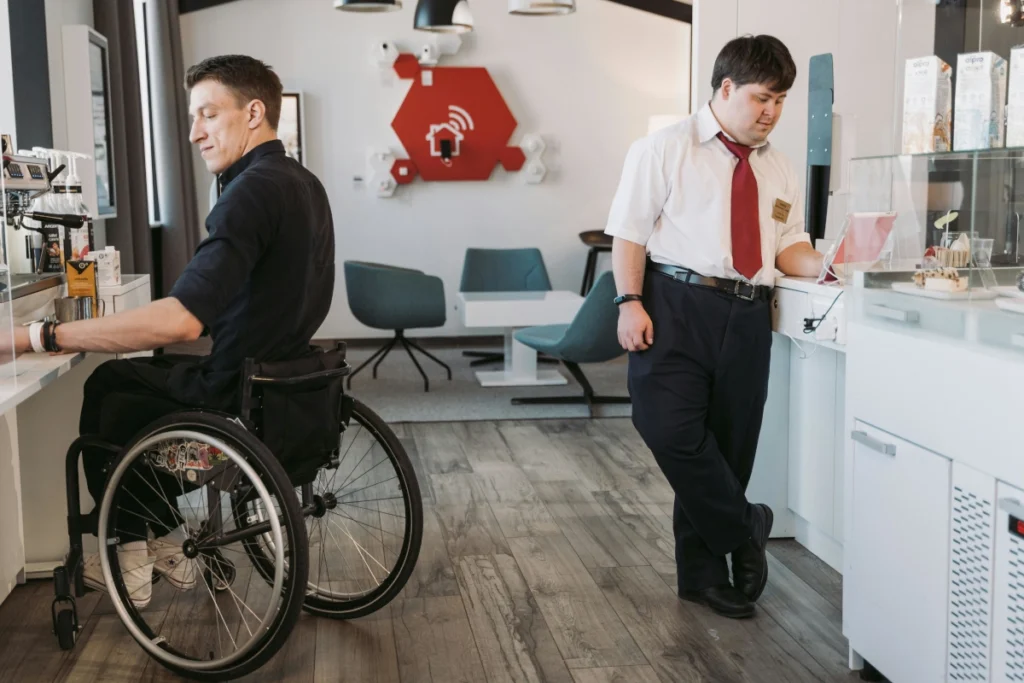
Every year, March invites the world to reflect on something that goes far beyond a commemorative date. O International Down Syndrome Day ( March 21) reminds us that inclusion Truth is not just discourse. It's structure, it's process, it's politics. For companies, this reminder comes at a particularly opportune moment, as 2026 marks the end of the transition period for the update of the NR-1, This is the Regulatory Standard that has demanded that Brazilian organizations take a much more active stance towards the psychosocial risks at work.
But what exactly is NR-1 and what has changed? Regulatory Standard No. 1 is the basic standard of the Ministry of Labor and Employment that establishes the general provisions on health and safety at work in Brazil. It has existed for decades, but underwent a significant update that came into force definitively in 2025 and whose adaptation period ends in 2026.
The great novelty of this revision is the explicit inclusion of the psychosocial risks in Occupational Risk Management (ORM). This means that factors such as excessive pressure, a toxic organizational climate, a lack of autonomy and even environments that don't offer adequate accessibility are now treated with the same rigor as chemical or physical risks.
By 2026, companies must demonstrate that they have surveyed these risks, that they have drawn up action plans and that they have continuous monitoring mechanisms in place. The Ministry of Labor's inspectors are authorized to verify that these requirements have been met, and the sanctions for those who are not in compliance include fines and embargoes.
This transition marks a historic turning point. For the first time mental health of workers is no longer just an HR issue, but is now part of the legal and strategic pillar of organizations.
A NR-1 recognizes that the emotional well-being of employees has a direct impact on business results. Organizations that neglect the mental health of their teams face a cycle of absenteeism, a drop in performance and the loss of professionals who bring with them accumulated knowledge and experience.
More than avoiding penalties, complying with the NR-1 represents a real opportunity to build more humane, balanced and productive environments. Companies that see this transformation as part of their strategy, and not just as a bureaucratic obligation, come out ahead in attracting the best talent and consolidating a organizational culture capable of sustaining consistent results over time.
And in the context of International Down Syndrome Day, This message takes on an even deeper dimension. Inclusion and psychosocial security are inseparable and mutually reinforcing.
The weight of reality and market indicators
The figures on mental health at work in Brazil leave no room for doubt. In 2024, sick leave due to mental and behavioral disorders reached an all-time high of 472,000 cases registered by the INSS, This is an increase of 68% over the previous year. Anxiety, depression and burnout lead the causes, and the pattern is no coincidence: a research from Creditas Benefits showed that 86% of Brazilian workers have faced work-related mental health problems.
The cost to organizations is significant. According to WHO and ILO, Depression and anxiety mean that 12 billion working days are lost every year in the world, generating a loss of close to US$1 trillion in productivity.
When these figures are translated into day-to-day business, the impact shows up in employee absenteeism, a drop in engagement, difficulty in retaining talent and an increase in labor liabilities. Ignoring the emotional well-being of teams, therefore, is not just a human issue, it is a high-risk financial decision that no conscious leader can afford to put off any longer.
Accessibility and inclusion as pillars of NR-1 compliance
A fundamental point of NR-1 The interface with diversity groups, especially people with disabilities, is often overlooked. In International Down Syndrome Day, It is vital to understand that accessibility and inclusion are not institutional concessions or bonuses, but intrinsic components of occupational safety and regulatory compliance.
A NR-1, by incorporating the psychosocial risks to the scope of the Risk Management Program (RMP), broadens the understanding of what constitutes a safe working environment. From this perspective, when an organization does not provide the necessary adaptations for a disabled employee to perform their tasks with autonomy and dignity, it is generating an additional psychosocial risk that must be included in the risk inventory and treated with the same seriousness as any other occupational risk factor.
The integration of psychosocial risks to the organization's inventory means that it is not enough to offer superficial solutions such as meditation apps, one-off conversation circles or generic benefits that are detached from the reality of those who receive them.
Inspection now requires a diagnosis that genuinely listens to people, especially those who have historically been less listened to, and that transforms these perceptions into action plans with deadlines, defined people responsible and monitoring indicators.
In this sense, building a culture of accessibility goes beyond installing ramps or making assistive technologies available. It involves reviewing selection processes, adapting work dynamics, training leaders and ensuring that the voice of employees with disabilities is present in decisions that affect them.
When integrated into the ESG and corporate planning, this agenda ceases to be an isolated legal obligation and becomes a competitive differentiator and a structural component of sustainable value generation.
The voice of leadership and technology as a differentiator
O International Down Syndrome Day highlights a question that goes beyond raising awareness. To what extent are the technological tools that companies use to manage people designed to include everyone?
Listening platforms, climate monitoring systems and psychosocial risk diagnostics only fulfill their role when they are able to capture the experience of employees with intellectual disabilities and other underrepresented groups. Inclusive technology isn't just about facilitating access, it's about making the invisible visible.
Laura Salles, founder and CEO of PlurieBR, sums up the moment organizations are living through. “We are living in a time when taking care of people is no longer a choice but a management skill. The companies that have understood this first are those that use technology not just to monitor indices, but to listen. And real listening means ensuring that data reflects the experience of all people, not just the majority.”.
In this scenario, the NR-1 has come to make such listening compulsory. By incorporating psychosocial risks to the Risk Management Program, the standard recognizes that environments that ignore barriers to accessibility, In practice, companies that do not see the suffering of employees with disabilities or that treat inclusion as an isolated initiative are accumulating concrete occupational risks.
And this is precisely where technology stops being a differentiator and becomes a necessity. Specialized platforms, such as PlurieBR, already allow for continuous diagnostics that identify variations in engagement, early signs of psychological distress and barriers to accessibility before they turn into absenteeism, conflicts or labor liabilities. Cross-referencing this data by employee profile is what transforms a management tool into an equity and regulatory compliance tool.
“When technology is at the service of inclusion, it broadens the scope of empathy. Leadership alone can't see everything. But with the right data, it can act precisely where it matters most,” says Laura.
O International Down Syndrome Day reminds us that inclusion is an ongoing process. Accessibility, active listening and technology, when integrated into a genuinely committed organizational culture and aligned with the requirements of the NR-1, In this way, they cease to be a response to regulatory obligations and become the basis on which more humane, more innovative and more competitive companies are built.